
Most people don’t pick up a self-discovery book when everything in their life feels settled.
This usually happens when something feels off in your life. It might come after a loss. You keep going through your daily routine, but your reactions change. Things that once felt certain now seem less stable. It’s hard to put into words, especially when everything looks the same but doesn’t feel the same.
During these times, books help you slow down and reflect. They aren’t there to solve everything, but they can help you understand what’s changing.
Most people aren’t searching for step-by-step instructions.
They want to make sense of their own thoughts—why something feels heavier than it used to, or why certain things don’t matter as much anymore.
For many people, this happens after they’ve already started to feel disconnected from themselves. That feeling often brings up questions that are hard to answer alone.
A self-discovery book can help by describing situations that feel familiar. As you read, you might see parts of your own experience reflected in the story.
Recognizing yourself in a story can be more helpful than getting direct advice.
When you read a story, you do more than just follow the plot. You react to what’s happening.
You notice what you agree with, what makes you uncomfortable, and what lingers after you finish reading. These reactions reveal a lot about your current mental and emotional state.
That’s why self-discovery books work well for many people. They don’t try to explain everything, but instead give you space to think.
People rarely begin self-discovery when life feels stable.
It often starts after something changes inside you. This shift might come from loss, a big change, or a time when your sense of self feels uncertain.
Many people feel this as a kind of emotional distance. The disconnection that follows grief can make you wonder how you’ve changed and what still feels true to you.
This is often when people turn to a self-discovery book. Not just for answers, but to better understand what they’re experiencing.
Fiction lets you experience situations that feel real, but in a less direct way.
You follow a character as they go through change, memories, and uncertainty. While reading, you start to compare their experiences with your own.
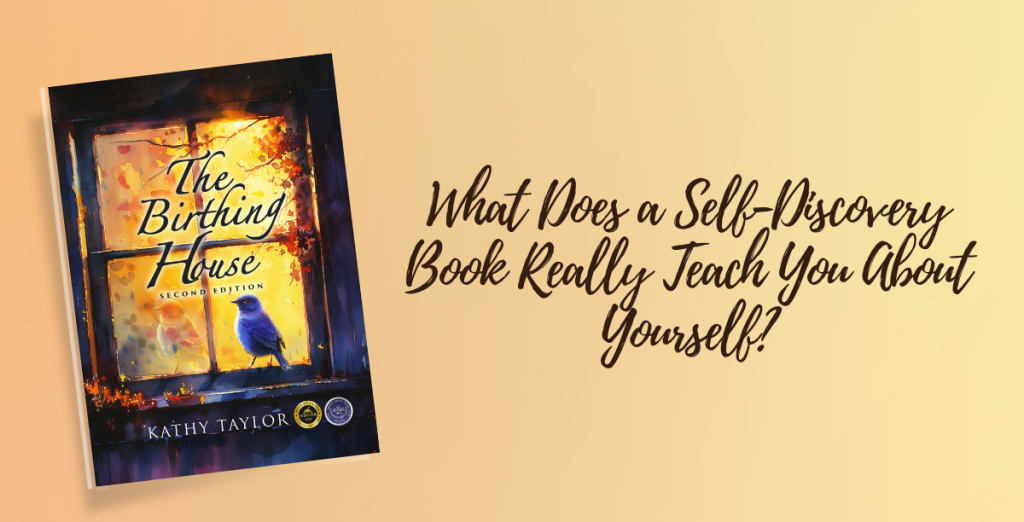
In stories like The Birthing House, a character’s identity grows through memories and their surroundings. As the character changes, readers often notice similar patterns in their own thoughts, especially after loss or emotional upheaval.
This kind of reflection takes time to develop.
You might not finish a self-discovery book with all the answers.
But some moments from the book stay with you. You may see a past experience in a new light or notice your reactions more clearly in daily life.
If you’ve felt disconnected after something difficult, this kind of reflection can help you see more clearly what has changed inside you.
A self-discovery book doesn’t tell you who you are. Instead, it helps you notice how your thoughts and feelings are changing.
When you read, you control the pace.
You can pause, reread, or spend time with a certain idea. There’s no rush to figure everything out.
That’s what makes self-discovery through reading so helpful. It fits your own process instead of trying to control it.
There is not a single moment when everything becomes clear. Understanding grows slowly. You start to notice small changes in your thoughts, values, and reactions.
If you’ve felt distant after a loss, you probably know how much your sense of self can change. Noticing that change is often the first step to understanding it. A self-discovery book can support you through this process. It helps you look more closely at your own experience and understand it in your own time.